Key Overviews
- The ceremony is the legal moment you become British. You only acquire citizenship once you have taken the oath and pledge in front of a registrar, not when the Home Office posts your decision letter.
- You must attend within three months of the invitation letter. Missing this window without good reason will cause your application to be refused and you will need to apply again.
- The ceremony fee of £130 is included in your application fee. No separate ceremony cost is payable to the Home Office, although individual local authorities can charge for private ceremonies.
- You can take two guests and wear what you wish. Smart attire is recommended and national dress is welcome. Children under six are not usually admitted.
- Your certificate of British citizenship is given to you on the day. Keep it safe. You will need it to apply for your first British passport.
Introduction
Receiving the email or letter that confirms your naturalisation has been approved is one of the most important moments in a UK immigration journey. However, approval is not the end of the process. You also must attend a citizenship ceremony within three months of receiving your invitation. The British citizenship ceremony is a legal requirement, and you only become a citizen at the moment you take the oath and pledge.
For the full application costs, see our British citizenship fees breakdown.
This post explains what happens at a British citizenship ceremony in 2026, how to book, what to bring, who can attend, and what comes next. Our team has supported clients through every stage of the naturalisation route, and the questions we are asked most often after approval are the practical ones covered below.
Why the citizenship ceremony exists
The ceremony exists because British citizenship is conferred by oath, not by decision letter. Section 42 of the British Nationality Act 1981 requires every adult applicant for naturalisation or registration to make a citizenship oath and pledge before they can be granted citizenship. Until the oath has been administered by an authorised person, you remain a foreign national with leave to remain.
In practical terms this means three things. Your decision letter is a conditional grant. Your time as a British citizen begins on the date of the ceremony, which is also the date that appears on your certificate. Any application for a British passport must wait until you have your certificate in hand, because the Passport Office will ask for it. If you are still waiting for a decision, our guide explains current British citizenship processing times, including what happens after biometrics.
The three-month rule
You must attend your citizenship ceremony within three months of the date of your invitation letter. This rule is set out in the Home Office naturalisation guidance and is enforced strictly. Where you do not attend within the window and have no good reason, your application will be refused and the application fee, including the ceremony fee, is not refunded. You would then need to make a fresh application and pay the fee again.
Good reasons for missing the deadline are narrow. Serious illness with medical evidence, bereavement of an immediate family member, and certain unavoidable work or travel commitments may be accepted.
If you are looking to apply for British Citizenship and are unsure of the process, call us on 0208 757 5751 or use our contact form and we can guide you on the next steps.
How to book your ceremony
You book your ceremony directly with your local authority, not with the Home Office. Your invitation letter or email tells you which council is responsible for arranging your ceremony, which is the council you selected in your application form. Some councils allow you to book online, others require you to phone or email.
You will need to provide your invitation reference number, the names and ages of any guests, and your preferred dates. Most councils run group ceremonies on weekdays in their council chamber or registry office, and these are included in the application fee. Many councils also offer private ceremonies at a higher cost, where you can have more guests and choose a venue, although these are optional.
When you book, you will be asked whether you wish to take the oath of allegiance, which is a religious oath, or the affirmation, which is a non-religious alternative with the same legal effect. You will also be asked whether you wish to take the oath in English or, if attending a ceremony in Wales, in Welsh.
What happens on the day
A typical citizenship ceremony lasts around 30 minutes from arrival to departure. You should aim to arrive at least 15 minutes before your scheduled time. You will be greeted by a council officer who will check your invitation letter and identification, and direct you and your guests to the ceremony room.
The ceremony itself follows a set order. The presiding officer, normally the Mayor, the Lord Lieutenant’s representative, the Superintendent Registrar, or another authorised person, gives a short welcome speech. New citizens are then invited to take the oath or affirmation and the pledge of loyalty to the United Kingdom. Cards with the words are provided, and the officer guides everyone through it.
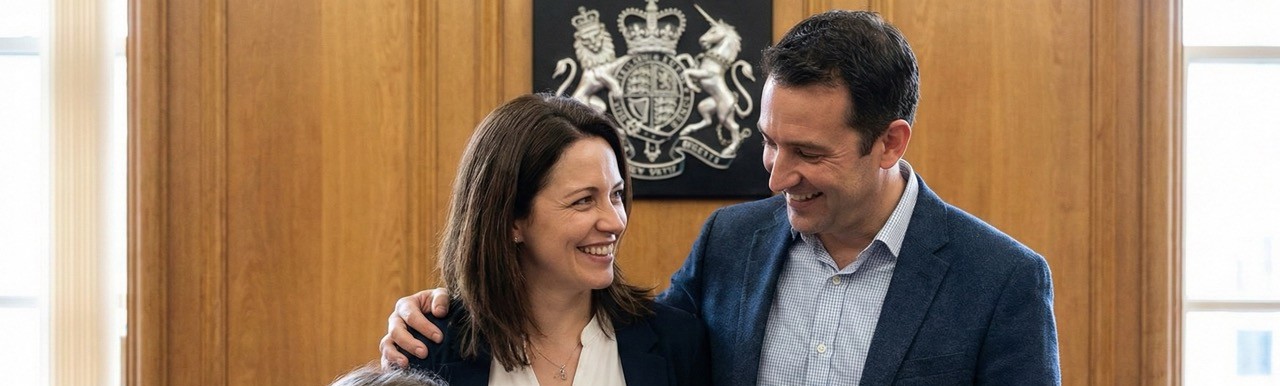
After the oath and pledge, each new citizen is called individually to receive their certificate of British citizenship and a welcome pack. Many councils play the national anthem and arrange for an official photographer. The photographs are optional and chargeable directly to the photographer, not the council.
You are now a British citizen. The certificate you hold confirms it.
The oath of allegiance and the pledge
Every adult applicant must make both an oath, or affirmation, and a pledge before becoming a British citizen. The oath of allegiance is sworn to the reigning monarch, currently His Majesty King Charles III, and the pledge is a separate promise to respect the rights and freedoms of the United Kingdom and to uphold its democratic values and laws.
The wording of the oath is fixed by statute. The oath form reads: “I, [name], swear by Almighty God that on becoming a British citizen, I will be faithful and bear true allegiance to His Majesty King Charles III, his Heirs and Successors according to law.” The affirmation form replaces “swear by Almighty God” with “do solemnly, sincerely and truly declare and affirm”.
The pledge then follows: “I will give my loyalty to the United Kingdom and respect its rights and freedoms. I will uphold its democratic values. I will observe its laws faithfully and fulfil my duties and obligations as a British citizen.”
If you are taking the religious oath you may bring a holy book of your faith with you, and the council will normally provide a Bible if you do not bring one. If you choose the affirmation, no holy book is used. Both versions have identical legal effect.
Children under 18 and the ceremony
Children under 18 who are granted British citizenship by registration do not have to attend a ceremony or take the oath. The certificate is issued directly by the Home Office and posted to the address on the application. This is set out in the British Nationality Act 1981 and reflected in current Home Office guidance.
There is one important exception. A 17 year old who turns 18 during the processing of the application will need to attend a citizenship ceremony. In this, the Home Office will contact you to request payment for the ceremony before they email you a decision. Failure to pay will result in an unsuccessful application.
If you are applying for a child to be registered as a British citizen alongside your own naturalisation, our team can advise on the best way to apply. Speak to us on 0208 757 5751 for tailored advice on family citizenship applications.
Who can attend, and what to wear
You are usually allowed to bring two guests, although a small number of councils will permit more on request and some private ceremonies allow larger groups for an additional fee. Children under six are not admitted to most group ceremonies because of the formal nature of the proceedings.
There is no statutory dress code. Smart attire is recommended in keeping with the formality of the occasion, and national dress is explicitly welcomed by all councils. Many new citizens choose to wear clothing that reflects both their heritage and their new British identity, and this is encouraged. Photographs taken on the day often become an important family record.
You should bring your original invitation letter or email, photographic identification matching the name on your application, and any holy book you wish to use for the oath. You do not need to bring your old passport or your biometric residence permit to the ceremony, although you should keep both safe at home until your British passport is issued.
After the ceremony: your first British passport
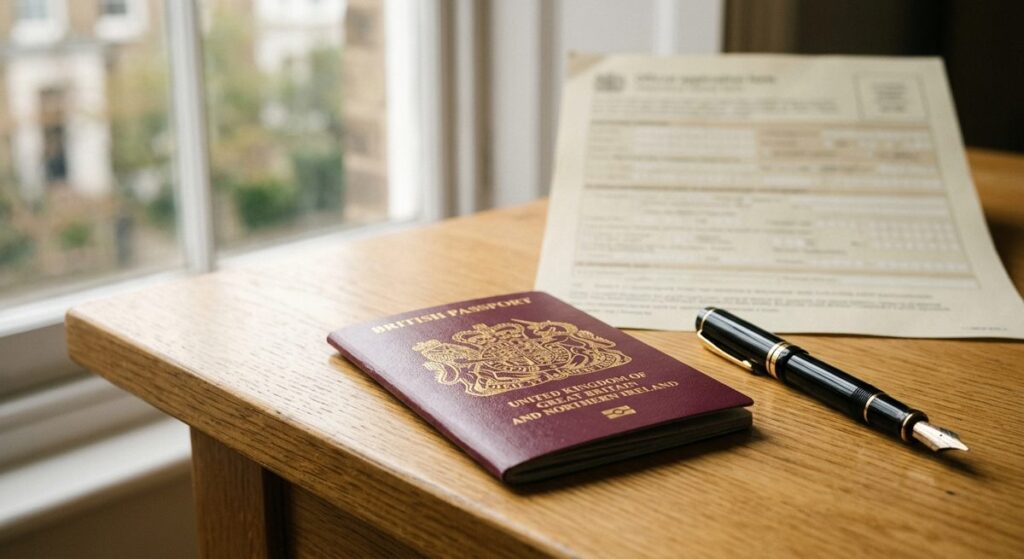
Your certificate of British citizenship is the document you need to apply for a British passport. The application is made online through GOV.UK and the standard fee in 2026 is £94.50 for an adult passport when applied for online. You will need to upload a digital photograph and post your foreign passport, and your naturalisation certificate to His Majesty’s Passport Office.
Apply as soon as you can if you intend to travel internationally, because processing currently takes around three weeks for a straightforward first time application and longer where supporting documents need verification. Once your British passport is issued, His Majesty’s Passport Office will return your foreign passport and naturalisation/registration certificate, normally separately.
If you wish to retain your previous nationality alongside British citizenship, the UK does not require you to give it up. Whether you can keep your original nationality depends on the laws of that country, and a small number of countries treat naturalisation as automatic loss of citizenship. Check the rules of your country of origin before you take the oath if dual citizenship matters to you. Our British citizenship hub covers the dual nationality position in more detail.
What can go wrong, and how to avoid it
The most common ceremony problem is missing the three-month deadline. Avoid this by booking the ceremony within a week of receiving your invitation. The second most common issue is arriving with the wrong identification or without the original invitation letter.
The third issue is name mismatch. Where your application listed a different spelling of your name to the one on your photographic identification, raise this with the council before the ceremony. The certificate must match the application, and any correction afterwards is processed by the Home Office and can take several months.
Frequently Asked Questions
The standard ceremony fee of £130 is included in the £1,709 naturalisation application fee paid to the Home Office, so there is no further cost for a standard group ceremony. Private ceremonies arranged with your council carry an additional fee that varies by area, typically between £100 and £300, and cover a private slot, additional guests, and choice of venue.
Two guests is the standard allocation for a group ceremony. Some councils will allow additional guests on request where space permits, and most will allow larger groups for an additional fee at a private ceremony. Children under six are not normally admitted to group ceremonies. Always confirm guest numbers with your council before the day.
How Whytecroft Ford Can Help
Our team supports clients through every stage of the naturalisation route, from initial eligibility assessment through to certificate in hand. We help clients prepare strong, well evidenced applications under the five year and three year naturalisation rules, advise on the good character requirement, the residence and absences calculation, and the Life in the UK and English language tests.
Where an application has been refused, we advise on whether a fresh application is appropriate and on alternative routes where available. Our work is grounded in advice and full representation, and our British citizenship service page sets out the scope of what we do.
If you are preparing to apply and want to make sure the next steps are handled correctly, call us on 0208 757 5751 or use our contact form to book a consultation. We offer fixed fee consultations and full representation packages, and we will always tell you honestly whether you need our help or whether you can manage the application yourself.
Sources and Further Reading
- GOV.UK, Citizenship ceremonies
- GOV.UK, Fees for citizenship applications and the right of abode
- British Nationality Act 1981, Section 42 and Schedule 5, Oath and Pledge
- GOV.UK, Apply for a British passport, first adult passport
About This Article
Written and reviewed by Whytecroft Ford‘s immigration team, authorised and regulated by the Immigration Advice Authority, registration number F201900075. All guidance is researched against primary sources, including the Immigration Rules and Home Office guidance at GOV.UK. Reviewed every six months, or sooner following a relevant rule change. Last reviewed: 27 April 2026.