Updated on 01 February 2026
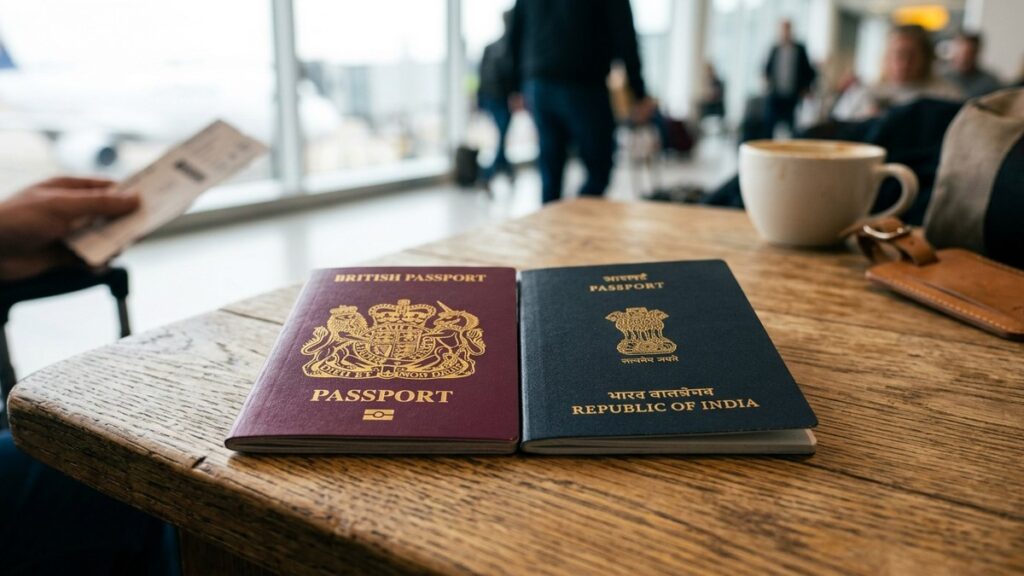
As global mobility increases, many people seek to maintain ties to more than one country. Dual citizenship (also known as dual nationality) allows an individual to be recognised as a citizen of two nations simultaneously. The United Kingdom permits its citizens to hold multiple nationalities, so acquiring British citizenship does not usually require you to renounce your original nationality. This guide explains what dual citizenship means under UK law, outlines how you can obtain it, highlights the benefits and potential drawbacks, and sets out the new requirements for dual nationals travelling to the UK.
Understanding dual citizenship
Dual citizenship is a legal status that recognises a person as a citizen of more than one country. Each country has its own rules on whether it recognises multiple citizenships.
UK law allows individuals to hold British citizenship alongside other nationalities. The Master Nationality Rule in international law governs diplomatic assistance for dual nationals. When a dual national is in a country of which they are a citizen, the UK government has no obligation to provide diplomatic protection; informal assistance may be offered but responsibility lies with the country where the individual is currently located. If a dual national is in a third country where they do not hold citizenship, they may seek help from any of the countries whose nationality they possess.
Eligibility for UK dual citizenship
To become a dual citizen of the UK and another country, you must first acquire British citizenship. Most applicants do this through naturalisation. The key requirements are:
- Indefinite leave to remain or settled status – You must have lived in the UK for at least five years and hold indefinite leave to remain (ILR) or settled status for at least 12 months before applying. Spouses of British citizens can apply immediately after obtaining ILR/settled status.
- Age and residence – You must be 18 or over and show you were physically present in the UK exactly five years before the Home Office receives your application.
- Absence limits – You should not have spent more than 450 days outside the UK in the five‑year qualifying period and no more than 90 days outside the UK in the 12 months before you apply.
- Language and Life in the UK test – Applicants must demonstrate knowledge of English (or Welsh or Scottish Gaelic) and pass the Life in the UK test.
- Good character and intention to reside – The Home Office assesses criminal history and immigration compliance and requires applicants to intend to make the UK their permanent home.
For a more detailed breakdown of the naturalisation process and evidential requirements, see our separate guide on British citizenship by naturalisation, which explains each step and offers practical advice.
Travelling to the UK as a dual citizen
All British citizens have the right of abode in the UK; this means they can live and work in the UK without immigration restrictions. However, dual nationals must be able to prove their right of abode when travelling. The Home Office expects British citizens to show either a current British passport or a certificate of entitlement to the right of abode. Certificates of entitlement, which previously took the form of a vignette sticker in a foreign passport, are being replaced by digital certificates. From 26 February 2026, holders will access a digital certificate through a UKVI account. Once digital certificates are introduced, you will not have to apply or pay again when your foreign passport expires, but you must update the UKVI account so the certificate is linked to your new passport.
Dual nationals who rely on a non-British passport should plan how they will evidence their status at the UK border. British and Irish citizens do not need an electronic travel authorisation (ETA) to travel to the UK, but a carrier can only apply that exemption where the traveller can show it. A dual national is therefore best advised to travel on a valid British or Irish passport, or to hold a certificate of entitlement to the right of abode, rather than to rely on a non-British passport alone.
For detailed guidance on obtaining a certificate of entitlement, consult the official GOV.UK guidance on proving right of abode.
Benefits of dual citizenship
Dual citizenship can offer significant advantages:
- Unrestricted residence and work – Dual nationals can live, work and study indefinitely in both countries.
- Two passports – Holding passports from two countries provides flexibility in international travel and may offer access to visa‑free travel to different destinations. British citizens can enter the UK with a British passport or certificate of entitlement.
- Political participation – In the UK, citizens can vote in parliamentary and local elections and stand for public office.
- Access to public services – Dual nationals have access to public services and social benefits (subject to local eligibility rules) in both countries.
- Property and investment rights – In many countries dual nationals can own property and invest without the restrictions placed on non‑citizens.
- Security and flexibility – If political or economic conditions deteriorate in one country, dual citizenship gives you the option to reside in another.
Drawbacks and considerations
Despite the benefits, dual citizenship involves certain obligations and risks:
- Double taxation and legal obligations – Dual nationals may be subject to tax laws and civic obligations (such as military service) in both countries. It is essential to check tax treaties and national laws before applying.
- Dual nationality restrictions – Not all countries allow dual citizenship; some will require you to renounce existing nationality. For example, India, Japan and Singapore prohibit dual citizenship, so acquiring British citizenship may lead to loss of your original nationality. Always verify your home country’s position on dual citizenship.
- Master Nationality Rule – When a dual national is in a country of which they are a citizen, the UK cannot provide diplomatic assistance and may only make informal representations.
- New travel documentation requirements – From February 2026, dual nationals must carry a British passport or digital certificate of entitlement to avoid boarding refusals.
- Additional costs and administration – Maintaining passports for two countries involves fees and renewal timelines. As of 8 April 2026, naturalisation costs £1,839 in total (£1,709 to apply plus a £130 citizenship ceremony fee), and a certificate of entitlement to the right of abode costs £589.
Countries that permit or restrict dual citizenship
Whether you can hold dual nationality depends on both UK law and the laws of your other country of nationality. Many countries permit their citizens to hold multiple nationalities, including Australia, Canada, Ireland, Italy, France, Sweden and the United States. Others impose restrictions or ban it altogether; countries such as India, China, Japan, Singapore, Indonesia and Austria generally do not allow their citizens to retain another nationality. Because these rules can change, check the relevant immigration legislation or consult an expert before applying for another citizenship.
For an up‑to‑date list of countries permitting or prohibiting dual citizenship with the UK, see our settled status versus British citizenship guide, which includes examples and additional considerations.
How to apply for dual citizenship
If your home country permits dual nationality and you meet the eligibility criteria, you can apply for naturalisation to become a British citizen:
- Check your eligibility – Ensure you meet the residence, absence, language and character requirements. The criteria differ for spouses of British citizens.
- Gather documentation – Prepare evidence of your residence in the UK (e.g., utility bills, tenancy agreements), proof of ILR or settled status, Life in the UK test pass, and language certification.
- Submit your application – Applications are made online through the Home Office. The fee is £1,839 per adult (£1,709 to apply plus a £130 ceremony fee) and already includes the citizenship ceremony.
- Attend biometrics and ceremony – You will need to submit your biometrics and attend a citizenship ceremony once your application is approved.
After naturalisation, you can apply for a British passport. If your other country allows dual nationality, you will then hold two valid passports.
For a comprehensive step‑by‑step guide and personalised advice, our specialists can help you navigate the naturalisation process and assess any implications for your existing nationality.
Why choose Whytecroft Ford?
At Whytecroft Ford, we are specialists in UK immigration and nationality law. Our team provides tailored guidance on whether dual citizenship is right for you, assesses your eligibility for naturalisation, and assists with preparing strong applications. We can also advise on the implications of dual nationality, including compliance with the Master Nationality Rule and upcoming digital right‑of‑abode requirements.
If you are considering applying for British citizenship or have questions about dual nationality, contact us on 0208 757 5751 or use our Contact Form.
Frequently Asked Questions
Acquiring a foreign citizenship does not cause you to lose your British citizenship. UK law allows you to apply for foreign citizenship and keep your British nationality
It depends on both UK law and the laws of the other country. Under the British Nationality Act 1981, British citizenship generally passes automatically to only one generation born abroad. A child born overseas will automatically be British only if their parent is a British citizen “otherwise than by descent” (that is, born, adopted or naturalised in the UK)