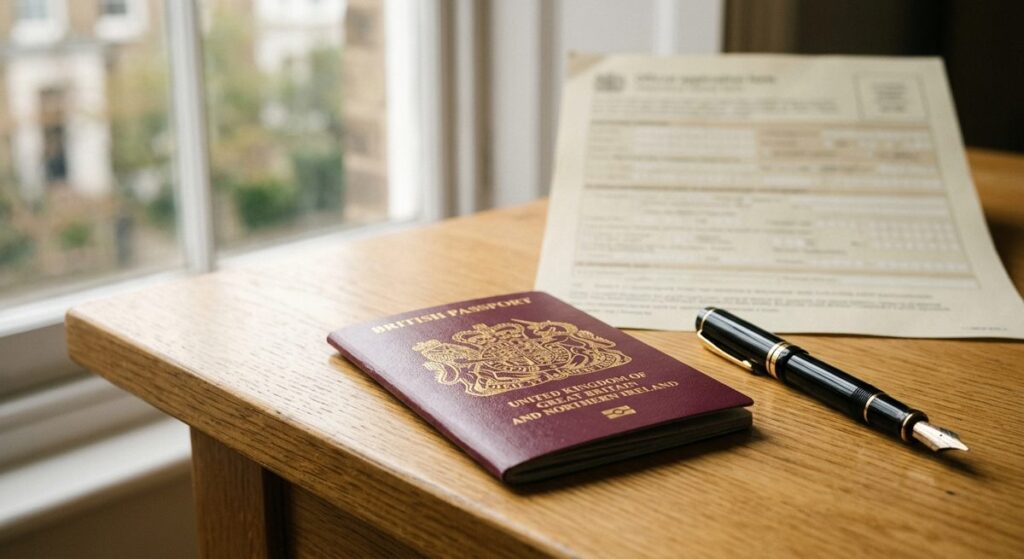
Owing money on a bill, a card or a council tax account does not, on its own, stop a person becoming a British citizen. Naturalisation includes a good character requirement, and part of it looks at whether a person’s financial affairs are in reasonable order. An ordinary debt being repaid, or a settled county court judgment, is not normally a bar, whereas deliberate non-payment or a false declaration can be. Each application is decided on its own merits and as a whole. Other factors may bear on the outcome, so professional advice should be sought before applying. This post provides an overview of how unpaid bills and debts are treated in a British citizenship application by naturalisation.
Do unpaid bills or debts affect a British citizenship application?
Unpaid bills and debts do not usually prevent a grant of British citizenship. The naturalisation good character assessment considers a person’s financial soundness, but it is concerned with conduct rather than wealth. A person who is managing a debt, or who fell behind and is putting it right, is not normally refused on that basis.
The requirement looks at how a person has handled their obligations. Ordinary borrowing, arrears during a period of hardship, or a debt now being repaid are treated as part of everyday life. A refusal on financial grounds is reserved for conduct that reflects on character, such as a refusal to pay what is plainly owed. The requirement sits within the naturalisation route, alongside other minor matters such as motoring penalties, which are covered in the guide to driving offences in British citizenship applications.
What does the good character requirement say about money?
The good character guidance treats debt as a character issue only where the conduct behind it is culpable. An application is not normally refused simply because a person is in debt. This is particularly so where repayments are being made as agreed, or genuine efforts are being made to clear what is owed.
The concern is deliberate or reckless behaviour. Where a person builds up debts deliberately and shows no serious intention to repay them, the application will normally be refused. The distinction the Home Office draws is between an inability to pay and an unwillingness to pay. A person doing their best to meet their obligations is treated very differently from a person avoiding them.
Does unpaid or late council tax affect citizenship?
Late or unpaid council tax does not normally prevent naturalisation where the arrears arose from genuine financial difficulty. This is especially so where an arrangement to pay has been, or is being, negotiated with the local authority. The guidance recognises that people fall behind on council tax for reasons that are not always within their control.
A problem arises where a person has unreasonably failed to pay, or has given false information to avoid paying the correct amount. Clearing the arrears, or agreeing a payment plan and keeping to it, addresses the point in most straightforward cases. The council tax position should be disclosed honestly in the application rather than left out.
Does a CCJ or other debt affect citizenship?
A county court judgment or other debt does not automatically bar a British citizenship application. A CCJ that has been satisfied, or one that is being paid under an arrangement, is generally treated as an ordinary financial matter. The same applies to credit cards, loans and utility arrears that are being managed.
The weight given to a debt depends on the conduct behind it, not the amount alone. Debts run up deliberately, or ignored with no attempt to pay, reflect on character. A person repaying what they owe, even slowly, is showing the responsibility the requirement looks for. Evidence of the arrangement and the payments made supports the application.
What about NHS debt or money owed to the Home Office?
Certain debts owed to public bodies are treated more strictly than ordinary consumer debt. An outstanding NHS debt of 500 pounds or more can lead to refusal under the Immigration Rules until it is paid. Once the NHS debt is cleared, it is not counted against the applicant in the character assessment.
Money owed to the Home Office is treated in the same spirit. Unpaid litigation costs ordered in favour of the Home Office may reflect on a person’s character until they are settled. These are specific categories, and an applicant who owes money to a public body should resolve it before applying wherever possible.
When can a financial issue become a problem?
A financial issue becomes a problem where it shows dishonesty or a deliberate disregard for obligations, rather than simple hardship. The clearest examples are a refusal to pay what is plainly owed, a false statement made to avoid payment, or debts run up recklessly with no intention to repay.
Bankruptcy is treated as a more serious matter, particularly where it is recent or accompanied by a disqualification order. A bankruptcy discharged many years ago is viewed differently from a current one. Cases involving deliberate non-payment, dishonesty or insolvency are assessed individually on their facts, and anyone in that position should take advice before applying. An application refused on character grounds can be made again once the position is put right, as explained in the guide to what to do if British citizenship is refused.
How should a financial issue be presented in the application?
A financial issue is best addressed by disclosing it fully and showing that it is being handled responsibly. The application asks about a person’s circumstances, and an honest, complete answer is essential, because a false or incomplete declaration is itself a good character failure.
Supporting evidence helps. A payment arrangement with a creditor or council, a statement showing regular payments, or confirmation that a debt has been cleared all show the matter is under control. Presenting the position clearly is usually better than leaving the Home Office to draw its own conclusion. Common disclosure errors are covered in the guide to British citizenship mistakes to avoid, and the wider process is set out in the British citizenship application guide.
Unpaid bills in practice
The two scenarios below show how a minor financial matter is commonly treated. They are illustrative only, and each application is decided on its own facts.
An applicant fell behind on council tax during a period out of work and agreed a payment plan with the council. By the time of the application, the plan is being paid on time and part of the arrears is cleared. The arrears arose from genuine hardship and are being addressed, so this is not normally a bar to naturalisation.
An applicant received a county court judgment two years ago for an unpaid credit card. The judgment was satisfied in full a year later. A settled CCJ that has been paid is treated as an ordinary financial matter, and the applicant discloses it with evidence that it is resolved.
Frequently asked questions
Will I be refused British citizenship because I am in debt?
No, not for being in debt alone. An application is not normally refused simply because a person owes money, particularly where repayments are being made as agreed or genuine efforts are being made to clear the debt. A refusal on financial grounds is reserved for deliberate non-payment, reckless debt with no intention to repay, or dishonesty about the position.
Does unpaid council tax stop you getting citizenship?
Not usually, where the arrears arose from genuine financial difficulty and an arrangement to pay has been agreed. The problem is an unreasonable failure to pay, or giving false information to avoid paying. Clearing the arrears or keeping to a payment plan, and disclosing the position honestly, resolves the point in most straightforward cases.
Does a CCJ affect a British citizenship application?
A county court judgment does not automatically bar an application. A satisfied CCJ, or one being paid under an arrangement, is generally treated as an ordinary financial matter. What matters is the conduct behind the debt and whether it is being handled responsibly, not the existence of the judgment alone.
Do I have to declare debts on a citizenship application?
Where the application asks about a person’s circumstances, the answer must be honest and complete. A false or incomplete declaration is itself a good character failure, and is treated more seriously than the underlying debt. Disclosing a debt with evidence that it is being managed is the correct approach.
What if I owe money to the NHS?
An outstanding NHS debt of 500 pounds or more can lead to refusal under the Immigration Rules until it is paid. Once the debt is cleared, it is not counted against the applicant. An applicant who owes money to the NHS should settle it before applying wherever possible.
How Whytecroft Ford can help
The Whytecroft Ford immigration team assesses whether a straightforward financial matter is likely to affect a naturalisation application, and how best to present it. The firm reviews the position, confirms what should be disclosed, and helps assemble the supporting evidence. This is particularly valuable for the settled applicant who is otherwise eligible and simply wants reassurance that a minor debt will not stand in the way. The Home Office fee is non-refundable, and the current amount is set out in the British citizenship application cost guide.
To discuss your naturalisation application with our team, call 0208 757 5751 or use the contact form.
Sources
- Good character: nationality policy guidance – GOV.UK
- Apply for citizenship if you have indefinite leave to remain or settled status – GOV.UK
- British Nationality Act 1981 – legislation.gov.uk