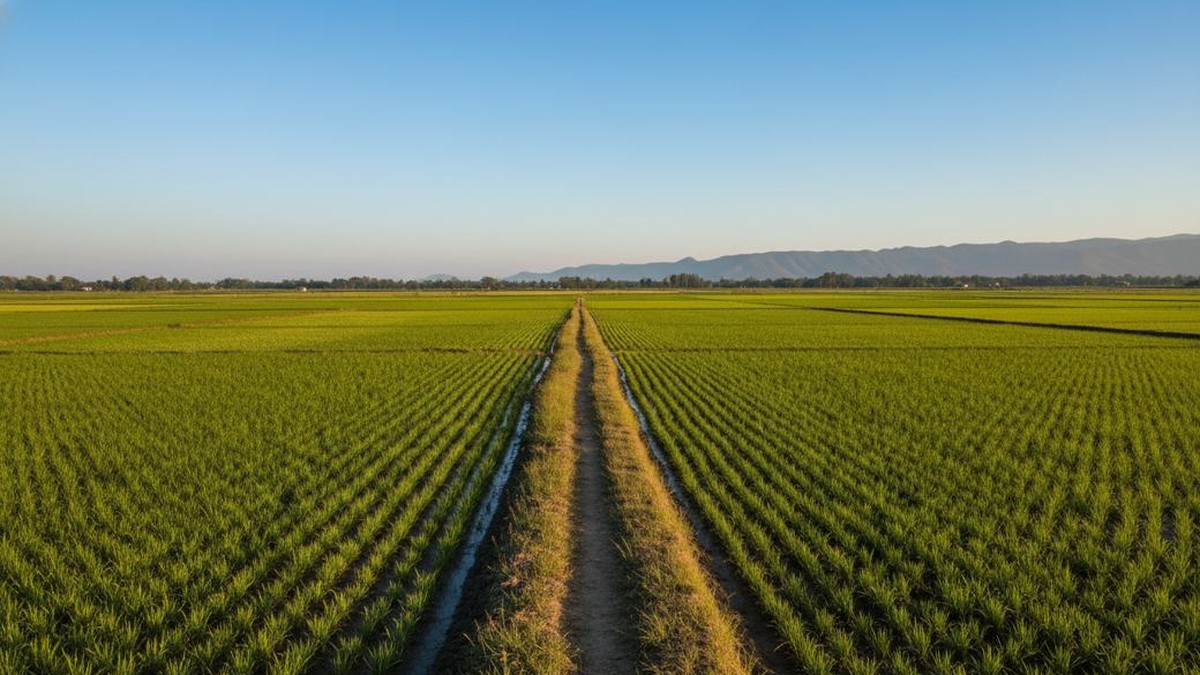
A UK-based Non-Resident Indian (NRI) or Overseas Citizen of India (OCI) cannot purchase agricultural land, farmhouse property, or plantation property in India. The prohibition is set under the Foreign Exchange Management Act 1999 (FEMA), and it applies to a purchase regardless of how the funds are sourced. The same land may, however, be acquired lawfully by inheritance, or by gift from a Resident Indian, which is the material distinction in this area. A purchase made in breach of the prohibition is a FEMA contravention that can attract a penalty and can put the title at risk. This post provides an overview of the rules on buying agricultural land in India as an NRI or OCI, and the lawful routes by which such land can still be acquired.
For the complete picture, see our Overseas Citizen of India (OCI) card.
Can an NRI or OCI buy agricultural land in India?
An NRI or OCI cannot buy agricultural land in India. The restriction extends to farmhouse property and plantation property, and it applies to a purchase whether the money comes from funds in India or from funds remitted from abroad.
The prohibition sits under FEMA and the Reserve Bank of India regulations on the acquisition and transfer of immovable property by persons resident outside India. An NRI or OCI is permitted to buy residential property and commercial property in India without prior approval, but the permission does not extend to agricultural land, farmhouse, or plantation property. The restriction is on the class of property, not on the buyer’s means or intentions. Our buy Indian property as an NRI guide sets out which classes of property an NRI may purchase, and our Indian Property Law hub sets out the wider framework.
What counts as agricultural land, farmhouse, and plantation property?
Agricultural land is land classified for cultivation in the relevant state revenue records, plantation property is land used for crops such as tea, coffee, or rubber, and a farmhouse is a dwelling on agricultural land. The classification is determined by the land’s recorded use, not by what the buyer intends to do with it.
The status of a parcel is established by the entry in the state land or revenue records and by the local zoning classification. A plot recorded as agricultural remains agricultural for the purpose of the FEMA restriction even where it is no longer farmed, until it is formally converted to non-agricultural use under the relevant state procedure.
Conversion of agricultural land to residential or commercial use is a state-law process, and the converted status must be reflected in the records before the land falls outside the restricted class. The distinction matters because a parcel that has been lawfully converted to non-agricultural use may then be purchased by an NRI on the residential or commercial basis.
Why are NRIs and OCIs prohibited from buying agricultural land?
The prohibition reflects a long-standing policy of reserving agricultural land for resident owners, carried into the foreign-exchange framework under FEMA. The rule treats the purchase of farmland by a person resident outside India as a transaction requiring control, rather than as a freely permitted acquisition.
The position is set out in the FEMA regulations on the acquisition and transfer of immovable property in India by persons resident outside India, and is summarised in the Ministry of External Affairs publication on the subject. The permission that allows NRIs and OCIs to buy residential and commercial property is expressly limited so that it does not apply to agricultural land, plantation property, or a farmhouse. A purchase of such property by an NRI or OCI would require specific prior approval from the Reserve Bank of India, which is not granted as a matter of course. The effect is that, in practice, direct purchase of agricultural land by a UK-based NRI or OCI is not available.
How an NRI or OCI can still acquire agricultural land: inheritance
An NRI or OCI may acquire agricultural land, a farmhouse, or plantation property by inheritance, notwithstanding the prohibition on purchase. The inheritance route is permitted under FEMA and allows the heir to hold the land indefinitely.
Inheritance is the principal lawful route by which a UK-based NRI comes to hold agricultural land in India. An NRI or OCI may inherit such land from a Resident Indian, and may also inherit it from another NRI or OCI provided the deceased acquired the property lawfully under the rules in force at the time.
There is no obligation to dispose of inherited agricultural land within a fixed period, and there is no upper limit on the area inherited. A separate restriction applies on the later sale of inherited agricultural land, which may be sold only to a person who is both a Resident Indian and an Indian citizen. Our what Indian property an NRI can inherit guide and our NRI inheriting Indian property service page set out the inheritance position and the sale restriction in full.
How an NRI or OCI can still acquire agricultural land: gift
An NRI or OCI may receive agricultural land, a farmhouse, or plantation property as a gift, but only from a Resident Indian. A gift of such property from another NRI or OCI is not permitted.
The gift route is narrower than the inheritance route. Agricultural land, farmhouse, and plantation property may be gifted to an NRI or OCI only by a Resident Indian, and the gift must be made by a registered gift deed under the relevant state stamp and registration rules.
The donor’s resident status at the date of the gift is the operative condition. A gift of agricultural land between two non-residents does not fall within the permission. Where the gift is to be executed while the donee is in the United Kingdom, a Power of Attorney is the standard mechanism for completing the registration in India. Our Indian Power of Attorney from the UK service page sets out how a UK-based recipient authorises a representative to complete the gift formalities in India.
What happens if an NRI buys agricultural land in breach of the rules
A purchase of agricultural land by an NRI or OCI in breach of FEMA is a contravention that can attract a penalty and can leave the title open to challenge. The transaction does not become lawful merely because it was registered before a sub-registrar.
A contravention of FEMA can attract a penalty of up to three times the sum involved in the transaction, under the penalty provisions of the Act. Beyond the penalty, the purchase exposes the buyer to the risk that the acquisition is unwound or that the land cannot later be dealt with cleanly, because the underlying acquisition was not permitted. Registration of a sale deed by a state sub-registrar records the transaction; it does not cure a breach of the foreign-exchange rules that govern who may acquire the land. An NRI who has already purchased agricultural land, or who is part-way through such a transaction, should take advice on the regularisation and disposal options before proceeding further.
Frequently asked questions
No. An OCI cardholder is treated the same as an NRI for this purpose and cannot purchase agricultural land, a farmhouse, or plantation property in India. An OCI cardholder may, however, acquire such property by inheritance, or by gift from a Resident Indian.
No. The restriction is on the class of property, not on the source of the funds. Remitting the purchase money from the United Kingdom does not make the purchase permitted, and a purchase of agricultural land by an NRI or OCI remains a FEMA contravention regardless of how it is funded.
An NRI cannot purchase agricultural land in order to convert it. Conversion to non-agricultural use is a state-law process that applies to the existing owner before any sale. Where a parcel has already been lawfully converted and is recorded as non-agricultural, an NRI may then purchase it on the residential or commercial basis.
Yes. The prohibition applies to purchase, not to inheritance. An NRI or OCI may inherit agricultural land, a farmhouse, or plantation property and hold it indefinitely, subject to the restriction that any later sale of inherited agricultural land must be to a person who is both a Resident Indian and an Indian citizen.
No. Agricultural land, farmhouse, and plantation property may be gifted to an NRI or OCI only by a Resident Indian. A gift of such property between two non-residents is not permitted under FEMA.
How Whytecroft Ford Can Help
The Whytecroft Ford Indian law team advises UK-based NRIs, OCIs, and British citizens of Indian origin on the acquisition, holding, and disposal of Indian land. The team works alongside qualified Indian counsel where the matter requires verification of the land classification, execution of a gift deed, or completion of a transfer before an Indian sub-registrar. The firm advises on the lawful routes to acquire agricultural land, on the Power of Attorney mechanism for completing formalities from the UK, and on the position where a purchase has already been made.
To discuss the acquisition or holding of Indian agricultural land from the United Kingdom, contact our Indian law team on 0208 757 5751 or use our Contact Form to get in touch.
Sources and Further Reading
- Acquisition and Transfer of Immovable Property in India by NRIs and OCIs (Ministry of External Affairs)
- Foreign Exchange Management Act 1999 and the Foreign Exchange Management (Acquisition and Transfer of Immovable Property in India) Regulations 2018 / RBI Master Direction [AUTHORITY TBC, link to rbi.org.in master direction]
- Foreign Exchange Management Act 1999, penalty provision (contravention penalty up to three times the amount involved) [AUTHORITY TBC, confirm section]
About this article. Written by the Whytecroft Ford Indian Law Team. All guidance is researched against primary sources, including the Foreign Exchange Management Act 1999, the relevant Reserve Bank of India regulations and master directions, and the Ministry of External Affairs publication on the acquisition and transfer of immovable property in India. Reviewed every six months, or sooner following a relevant rule change. Last reviewed: June 2026.


