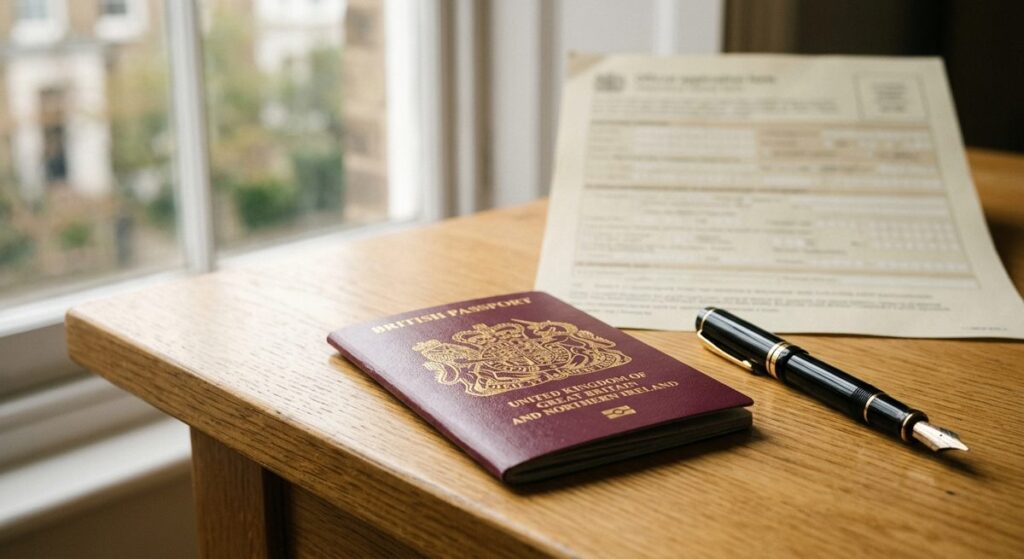
Indefinite Leave to Remain lets you live, work and study in the UK with no time limit and no visa to renew. It is the UK’s settlement status, and it is held by a person who has completed the qualifying residence period on an eligible route and met the settlement requirements. Losing the status is possible, mainly through long absence abroad, so the practical value of ILR lies in holding it securely and knowing what it allows. This post provides an overview of the benefits of Indefinite Leave to Remain for a person settling in the UK.
What is Indefinite Leave to Remain?
Indefinite Leave to Remain (ILR) is the immigration status that lets a person stay in the UK permanently, also called settlement. It has no expiry date, so the holder does not renew a visa or pay further immigration fees to remain. ILR is granted once an applicant completes the qualifying period on an eligible route and meets the residence, knowledge of language and life, and good character requirements. It is also the status a person must usually hold before applying for British citizenship.
What are the benefits of Indefinite Leave to Remain?
The main benefit of ILR is the right to live in the UK permanently without immigration conditions on work, study or recourse to public funds. The sections below set out what the status allows in practice.
Freedom to live, work and run a business
An ILR holder may take any employment, change employer, or become self-employed without further permission. There is no sponsorship requirement and no restriction on the type of work, so a settled person is free to work in any business, profession or employment, including running a company. This removes the conditions that limit most temporary visa holders.
Access to public funds and services
ILR removes the “no recourse to public funds” condition that applies to most temporary visas. A settled person may claim means-tested support where they meet the ordinary eligibility rules, including Universal Credit, Child Benefit, Housing Benefit and Pension Credit. Entitlement still depends on the rules of each benefit, not on immigration status alone.
A settled person uses the National Health Service on the same basis as any other UK resident, without paying the Immigration Health Surcharge that applies during a limited visa. ILR holders and their children can also access state education, and home-fee status and student finance for university study generally follow settlement, subject to the relevant ordinary residence rules.
Stability and protection from rule changes
ILR gives a settled person security that a time-limited visa does not. There is no renewal date and no need to keep meeting a salary threshold, a relationship requirement or other route conditions to stay. Changes to the rules of a particular visa route do not affect a person who already holds settlement, although the status can still be lost through long absence or revoked in serious cases.
Travel in and out of the UK
An ILR holder may travel in and out of the UK without applying for a re-entry visa each time. The status itself does not place a limit on individual trips. It can lapse where the holder remains outside the UK and Islands for two or more continuous years, so settled people who spend long periods abroad need to manage their absences.
Sponsoring family members
A settled person can sponsor a partner or child to join them in the UK under the family Immigration Rules. Eligible applications include a partner, a fiance or fiancee, and dependent children, each subject to the relationship, financial and other requirements of the relevant route. The position for joining family is set out on the ILR for dependants in the UK guide.
Pathway to British citizenship
ILR is the step before applying for British citizenship by naturalisation. A settled adult may apply once they have held ILR for 12 months, unless they are married to a British citizen, in which case there is no 12-month wait, and provided they meet the residence, good character, language and Life in the UK requirements. The full route is set out on the British citizenship guide.
Voting in local elections
Voting rights for ILR holders depend on nationality, not on the settlement status itself. Citizens of Ireland and qualifying Commonwealth countries may register to vote, including in UK general elections, while other nationalities are generally limited to local elections where local rules allow. British citizenship is what confers the full and unconditional right to vote in all UK elections.
How ILR differs from British citizenship
ILR gives permanent residence, but it is not the same as citizenship, and a few limits are worth understanding. ILR can lapse after two continuous years outside the UK, it can be revoked where a person no longer qualifies or in serious criminality cases, and it does not by itself give a British passport or the unconditional right to vote in national elections. British citizenship removes each of these limits, which is why many settled people naturalise once they are eligible. The two outcomes are compared in full on the settled status versus British citizenship guide.
Rule changes affecting settlement
The settlement requirements are subject to change, and several changes have been announced. The government’s immigration White Paper of May 2025 proposed extending the standard qualifying period for settlement from five years to 10 years for many routes, and raising the English language standard for settlement. These are proposals rather than settled rules, and for most routes the qualifying period remains five years as of June 2026. The qualifying period for each route is set out on the Indefinite Leave to Remain timeline guide.
Who can apply for ILR?
A person can apply for ILR once they have completed the qualifying period on an eligible route and meet the settlement requirements. The core conditions that apply to most routes are:
- Continuous residence for the qualifying period, usually five years, though some routes such as the Global Talent and Innovator Founder visas allow settlement after three years.
- No more than 180 days spent outside the UK in any rolling 12-month period of the qualifying years.
- Good character, including compliance with UK laws and the Immigration Rules.
- A pass in the Life in the UK Test.
- Knowledge of English at the required CEFR level for the route, as of June 2026.
How to apply and what it costs
An ILR application is made online using the form for the relevant route. Form SET (M) is used by the partner or parent of a person settled in the UK, and form SET (O) is used for most other routes, including the Skilled Worker, UK Ancestry, Global Talent and business categories. Both require supporting evidence of the qualifying period and the settlement requirements.
The Home Office charges a fee for each applicant, which is £3,226 per person as of April 2026, and optional priority services can shorten the decision time for an extra fee. A full breakdown is set out on the Indefinite Leave to Remain cost guide.
Proving ILR with an eVisa
ILR is now evidenced by an eVisa, an online record of a person’s immigration status. A settled person who holds older paper or vignette evidence, or who has no document confirming their status, can make a No Time Limit application to obtain an eVisa. Keeping a current eVisa makes it straightforward to prove the right to work, rent and travel.
Maintaining your Indefinite Leave to Remain
ILR continues for as long as the holder does not lose it through long absence, so maintaining it is mainly a matter of managing time spent abroad. The status can lapse after two or more continuous years outside the UK and Islands. Where this happens, a person may apply for a Returning Resident visa to resume settled status, and keeping personal details current with UK Visas and Immigration helps avoid problems when proving status later.
Frequently asked questions
Can people with Indefinite Leave to Remain claim benefits?
Yes. ILR removes the no recourse to public funds condition, so a settled person can claim means-tested benefits such as Universal Credit and Child Benefit where they meet the ordinary eligibility rules for each benefit. Entitlement depends on the rules of the benefit, not on the immigration status alone.
Can ILR be taken away?
Yes, in limited situations. ILR can lapse if the holder spends two or more continuous years outside the UK and Islands, and it can be revoked in cases such as serious criminality or where the status was obtained by deception. For most settled people who live in the UK, neither situation arises.
What are the disadvantages of ILR compared with citizenship?
ILR does not give a British passport, can lapse through long absence, and does not by itself give the unconditional right to vote in national elections. British citizenship removes these limits, which is why many people naturalise once they have held ILR for the required period.
How long after ILR can a person apply for British citizenship?
A settled person can usually apply for naturalisation 12 months after being granted ILR. The 12-month wait does not apply to a person married to a British citizen, who may apply as soon as they hold ILR, provided the other requirements are met.
Does ILR expire?
ILR has no expiry date and does not need to be renewed. It can lapse only through two or more continuous years of absence from the UK and Islands, so the status continues indefinitely for a person who remains resident.
How Whytecroft Ford can help
Settlement is the point where a person’s residence, absences and evidence over several years all have to line up against the rules for their route, and a single gap can delay a grant. The benefits of ILR only follow once the status is secured and then held without an absence that causes it to lapse.
The Whytecroft Ford immigration team advises on ILR applications across the work, family and other settlement routes, on maintaining settled status, and on the move from ILR to British citizenship. The team works with people who have built their lives here over five years or more and want the settlement application handled correctly the first time. To discuss your application with our team, call 0208 757 5751 or use the contact form.
Sources
- GOV.UK, Indefinite leave to remain in the UK: your rights and status
- GOV.UK, Check if you can get indefinite leave to remain
- GOV.UK, View and prove your immigration status (eVisa)
The material in this article is provided for guidance and general information only and is not intended to constitute legal or other professional advice on your circumstances upon which you should rely. In particular, the information should not be used as a substitute for a full and proper consultation with a suitably qualified professional. UK Immigration Rules are subject to change. Please do contact the Whytecroft Ford team if you require further advice.