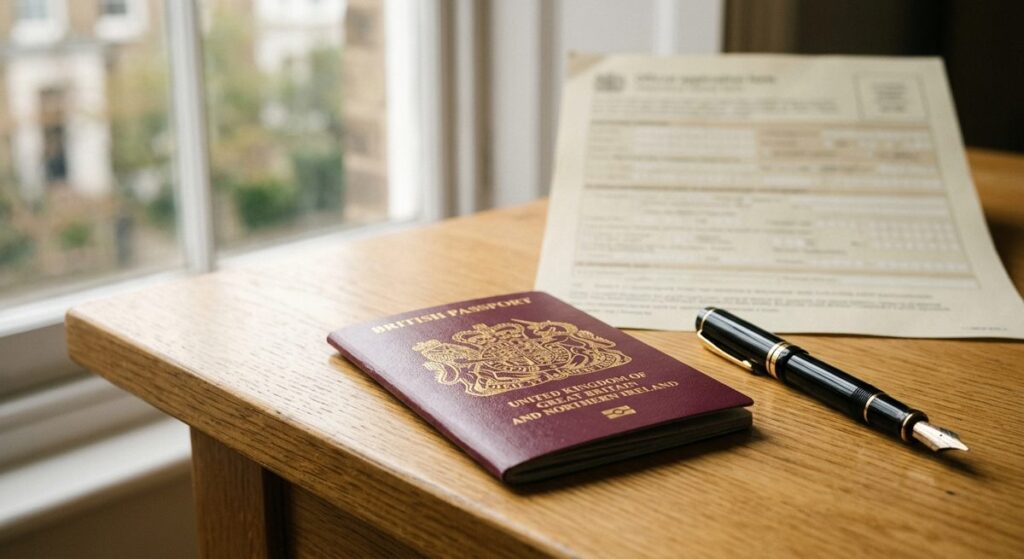
British citizenship for EU citizens is acquired through the standard naturalisation route. The applicant must have held settled status and must meet the Home Office’s residence and character requirements. Pre-settled status alone does not qualify an applicant. Applying before settled status has been held long enough, or on the wrong status, results in a refused application and a lost fee. This post provides an overview of the eligibility requirements and application route to British citizenship for EU citizens.
On This Page
- Can an EU Citizen Become a British Citizen?
- What Are the Requirements to Naturalise as an EU Citizen?
- Settled or Pre-settled Status and the Naturalisation Route
- The Five-Year Qualifying Period for EU Citizens
- What Changed After Brexit for EU Nationals Applying for Citizenship
- Good Character Requirement for EU Applicants
- Residence Requirements for EU Applicants
- Can the Children of EU Citizens Apply for British Citizenship?
- Do I Need to Give Up My Original Nationality?
- How Does an EU Citizen Prove Their Immigration Status When Applying for Citizenship?
- After Approval: The Citizenship Ceremony
- Frequently Asked Questions
- How Whytecroft Ford Can Help
Key Overviews
- EU citizens apply through the standard naturalisation route. There is no separate citizenship process for EU nationals; the applicant must hold settled status at the date of application, not pre-settled status alone.
- Most applicants reach this point after five years of continuous residence under pre-settled status, an upgrade to settled status, and a further 12 months holding it.
- Brexit did not remove the right to naturalise. It replaced free movement with a status-based route, so an EU citizen’s qualifying period now runs from their immigration status rather than automatic residence rights.
- Good character and absence limits apply equally to EU applicants: no more than 450 days outside the UK in the five-year period, and no more than 90 days in the final 12 months.
- The Form AN fee is £1,709, plus a £130 citizenship ceremony fee. The combined cost is £1,839, and standard processing takes around six months. A paid priority service is available for £500, bringing a decision within 30 working days.
Can an EU Citizen Become a British Citizen?
Yes. British citizenship for EU citizens is granted through naturalisation, the same route used by nationals of any other country. The applicant must hold a qualifying immigration status and meet a set residence period. English, knowledge and good character requirements must also be satisfied.
There is no separate citizenship application track for EU nationals. Naturalisation is granted under section 6 of the British Nationality Act 1981. For an EU citizen, the naturalisation clock starts from the eligibility category held under the EU Settlement Scheme, settled status in any case.
What Are the Requirements to Naturalise as an EU Citizen?
For an EU citizen not married to or in a civil partnership with a British citizen, Home Office must be satisfied that:
- the applicant is aged 18 or over;
- the applicant holds settled status at the date of application;
- the applicant was in the UK on the day five years before the application is received;
- the applicant has not been absent from the UK for more than 450 days during that five-year period;
- the applicant has held settled status for the 12 months immediately before applying;
- the applicant has not been absent from the UK for more than 90 days during the 12 months immediately before applying;
- the applicant meets the good character requirement, assessed on the balance of probabilities; and
- the applicant has passed the Life in the UK Test and holds a qualifying B1 English language qualification, unless an exemption applies.
Where the applicant is married to or in a civil partnership with a British citizen, the residence period reduces to three years. The 12-month requirement to have already held settled status before applying is also waived. Every other requirement above still applies.
Settled or Pre-settled Status and the Naturalisation Route
Settled status is the qualifying immigration status that lets an EU citizen apply for British citizenship. It works in the same way that Indefinite Leave to Remain qualifies applicants on other routes. Pre-settled status does not itself qualify an applicant to naturalise. After five years of continuous qualifying residence held under pre-settled status, an EU citizen’s immigration status is usually upgraded to settled status. Settled status must then be held for a further 12 months before a naturalisation application can be made.
The qualifying residence period reduces to three years where the applicant is married to or in a civil partnership with a British citizen. The extra 12-month wait after settled status is waived on this route too. This is the route under section 6(2) of the British Nationality Act 1981. Settled status must still be held at the date of application; only the residence period and the waiting time change.
The Five-Year Qualifying Period for EU Citizens
The standard qualifying period for British citizenship is five years of continuous UK residence. An EU citizen counts this period in the same way as any other applicant, against the same residence requirements for naturalisation.
The residence must be lawful throughout. This five-year period is separate from, and does not include, the 12-month period settled status must be held before applying.
Continuous residence is broken by excess time spent outside the UK. It is also broken by a period without valid immigration status, or by an immigration or deception issue on the applicant’s record.
What Changed After Brexit for EU Nationals Applying for Citizenship
Brexit replaced free movement with a status-based immigration system. An EU citizen’s right to apply for citizenship now depends on their immigration status under that system. The naturalisation requirements themselves, residence, character, English and Life in the UK, did not change for EU nationals.
An EU citizen who had exercised treaty rights in the UK for five years acquired permanent residence automatically before 31 December 2020. This was granted under the Immigration (EEA) Regulations. That framework closed when free movement ended.
EU citizens already living in the UK were required to apply to the EU Settlement Scheme by 30 June 2021. This application converted their position into settled or pre-settled status. An EU citizen arriving after the scheme closed applies for a UK immigration status on the same basis as a non-EU national. This is typically through a work, family or study route, before building towards settlement and then citizenship.
The qualifying status an EU citizen holds now determines when the naturalisation clock starts. This may be settled status, pre-settled status maturing into settled status, or a later route to Indefinite Leave to Remain.
Whytecroft Ford’s immigration team advises EU nationals on which qualifying status applies to their circumstances. Call 0208 757 5751 or use the contact form to confirm the position.
Good Character Requirement for EU Applicants
An EU citizen applying for British citizenship must satisfy the good character requirement, assessed on the balance of probabilities. This is the same standard applied to every naturalisation applicant, set out in Schedule 1, paragraph 1(1)(b) to the British Nationality Act 1981.
Good character considers criminal convictions, immigration breaches, financial conduct and honesty in previous dealings with the Home Office. An application may be refused on several grounds:
- a custodial sentence of 12 months or more, in the UK or overseas
- a pattern of offending that shows disregard for the law
- an unpaid debt to the public, such as an NHS charge
- a deception issue in an earlier immigration application
A custodial sentence of 12 months or more results in automatic refusal for applications made on or after 31 July 2023. No time limit applies after which this stops counting. A sentence under 12 months does not trigger automatic refusal.
Residence Requirements for EU Applicants
Residence requirements sit alongside good character. An applicant must not spend more than 450 days outside the UK during the five-year qualifying period. This limit is set out in Schedule 1, paragraph 1(2) to the British Nationality Act 1981. No more than 90 days may fall in the 12 months immediately before the application. An EU citizen applying on the three-year marriage route faces a shorter, proportionate absence limit over that period.
Can the Children of EU Citizens Apply for British Citizenship?
Yes. A child does not become British when a parent naturalises, but the child can be registered as a British citizen. Registration is granted under the British Nationality Act 1981, and Form MN1 is the application form. Two routes cover most families. A child born in the UK registers under section 1(3), and a child born outside the UK registers under section 3(1).
A child born in the UK is entitled to register under section 1(3). That entitlement arises once a parent becomes settled or becomes a British citizen. The Home Office must register a child who meets the conditions, and holds no discretion to refuse. The conditions are:
- neither parent was a British citizen or settled in the UK when the child was born;
- one parent has since become a British citizen or settled, while the child is under 18;
- an application is received before the child turns 18; and
- the child is of good character, if aged 10 or over.
Settled status under the EU Settlement Scheme counts as settled. Pre-settled status does not. For most EU families the entitlement therefore arrives with the parent’s settled status, before the parent’s own naturalisation is decided.
A child born outside the UK registers under section 3(1), at the Home Office’s discretion. The children registration guidance sets out when that discretion is normally exercised. The child is normally registered where:
- one parent is a British citizen, or is about to become one;
- any other parent involved in the child’s life is a British citizen or settled in the UK;
- the child has lived in the UK for the last two years, with a shorter period for a child under two;
- the child is settled in the UK, which normally means indefinite leave to remain or settled status;
- both parents consent where consent is needed; and
- there is no reason to refuse on character grounds.
A child with pre-settled status alone falls short of the settlement condition. The application is then considered on exceptional grounds, and compelling reasons must be shown.
This route is built around families applying together. A parent about to become British satisfies the first condition, so applying as a family strengthens the child’s position. Section 3(1) is the discretionary one of three registration routes open to a child born outside the UK.
Family members can be included on one online application where everyone applies from within the UK. Each person is assessed against the statutory requirements in their own right. Applications made from outside the UK must be submitted individually. A child under 18 does not attend a citizenship ceremony. If the child turns 18 before a decision is given then they will need to attend a citizenship ceremony.
Do I Need to Give Up My Original Nationality?
No. The UK allows dual citizenship, so an EU citizen who naturalises keeps their original nationality unless they choose to give it up. British law places no requirement on a new citizen to renounce any other nationality they hold.
Some EU member states take a different position. Whether an applicant’s country of origin permits dual nationality is a matter of that country’s own law. Some countries require a citizen to give up their original nationality on acquiring another. An applicant should check the position with their country’s law before applying.
An applicant who does lose their original nationality as a result of naturalising should confirm this with their home country’s authorities directly. This is a separate process from the UK naturalisation application, and it does not affect the naturalisation decision itself.
How Does an EU Citizen Prove Their Immigration Status When Applying for Citizenship?
An EU citizen’s settled or pre-settled status is held digitally, as an eVisa. No Biometric Residence Permit or passport vignette is issued for this status. The applicant generates a share code through the Home Office’s view and prove your immigration status service. This is provided with the Form AN application, so the Home Office can check the status held.
A share code is valid for 90 days and can be reused as many times as needed within that period. The applicant should generate it shortly before the application is submitted, since an early code can expire before the application is complete.
After Approval: The Citizenship Ceremony
An approved applicant becomes a British citizen on the date of their citizenship ceremony, the final step after the application itself is approved. The Home Office invitation gives the applicant three months to book and attend.
Attendance is required for anyone aged 18 or over. The ceremony involves an oath of allegiance, or an affirmation for an applicant who prefers not to swear a religious oath. It also includes a pledge to respect the UK’s laws and freedoms. The local authority organises the ceremony, usually alongside other new citizens, and an applicant can typically bring two guests. At the end, the applicant receives their certificate of British citizenship, the document a British passport application relies on.
The Form AN application also asks for a referee who has known the applicant personally and meets the Home Office’s referee criteria. It also requires biometric enrolment through the UK Visa and Citizenship Application Services centre.
Frequently Asked Questions
No. A child does not automatically become British when a parent naturalises.
Yes. The EU Settlement Scheme, and the naturalisation route that follows it, covers Swiss and other EEA nationals on the same terms as EU citizens. The same settled and pre-settled status categories and qualifying periods apply.
Yes. The Home Office good character guidance applies the automatic refusal threshold to a custodial sentence of 12 months or more, wherever it was served. A qualifying overseas conviction is treated the same way as one committed in the UK.
How Whytecroft Ford Can Help
An EU citizen’s route to British citizenship depends on the status they hold and how their qualifying period is calculated. Absences or character issues can also affect the application. Getting the timing wrong, applying before settled status has been held long enough, or miscounting absences, results in a lost fee and a delayed application.
Whytecroft Ford’s immigration team advises EU nationals moving from the EU Settlement Scheme towards naturalisation. This includes calculating the five-year qualifying period, confirming whether earlier residence counts towards it, and preparing the Form AN application and supporting evidence. The firm reviews an applicant’s residence history and current status before an application is submitted, so any timing or evidence gap is addressed in advance.
To discuss your application for British citizenship with our team, call 0208 757 5751 or use the contact form.
The material in this article is provided for guidance and general information only and is not intended to constitute legal or other professional advice upon which you should rely. In particular, the information should not be used as a substitute for a full and proper consultation with a suitably qualified professional. UK Immigration Rules are subject to change. Please do contact the Whytecroft Ford team if you require further advice.