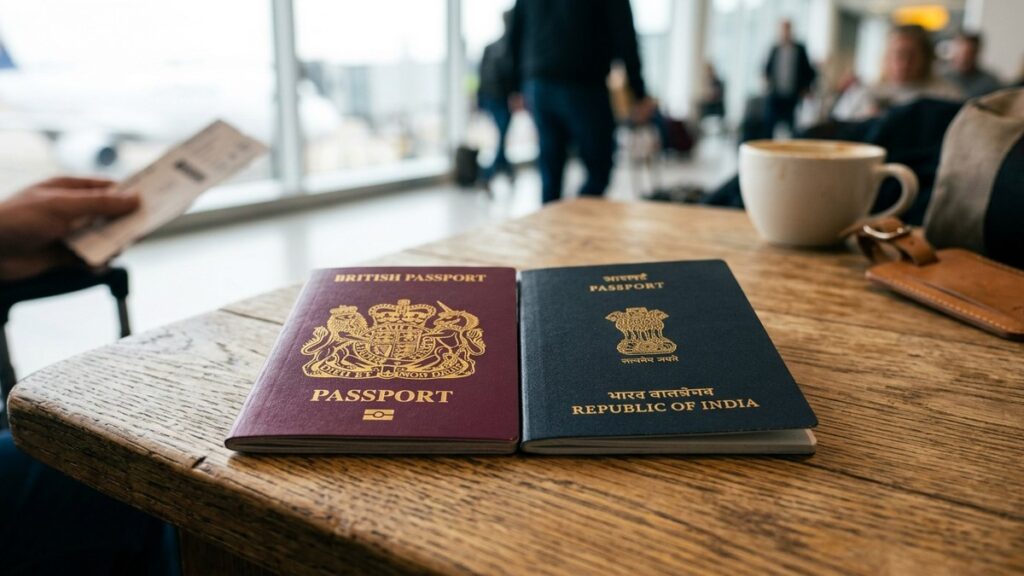
A British passport can be applied for once a person has become a British citizen by naturalisation or registration, using the naturalisation or registration certificate as the basis of the application. Indefinite Leave to Remain (ILR) does not, on its own, entitle the holder to a British passport; a passport follows citizenship, not settlement, so an ILR holder must naturalise first. This post provides an overview of applying for a first British passport after naturalisation in 2026.
Can you get a British passport after naturalisation?
A person who has naturalised as a British citizen can apply for a British passport using their certificate of naturalisation. The passport is the document that proves and lets the holder travel on their British citizenship.
Naturalisation is the evidence that a person a British citizen, and the British passport is the travel document issued to British citizens. The application for a first British passport is made to His Majesty’s Passport Office after the naturalisation certificate is received and after the citizenship ceremony has taken place.
The passport is not granted automatically with the certificate; it is a separate application with its own form, fee, and documents. Becoming a citizen also brings the wider rights of citizenship, including the right to live in the UK free of immigration control.
Our Naturalisation guide and Benefits of British Citizenship guide set out the citizenship route and what it confers.
Does ILR give you a British passport?
Indefinite Leave to Remain does not give the holder a British passport. ILR is a settlement status that allows a person to live and work in the UK without time limit, but it is not citizenship, and only British citizens hold British passports.
ILR and British citizenship are different statuses. ILR removes the time limit on a person’s stay and is evidenced by an eVisa, not by a passport. A British passport is available only after the ILR holder takes the further step of naturalising as a British citizen, which most applicants can do 12 months after obtaining ILR, or sooner where married to a British citizen.
An ILR holder who wants a British passport must therefore naturalise first, meet the residence, English, Life in the UK, and good character requirements, and then apply for the passport on the strength of the naturalisation certificate.
Our settled status versus British citizenship guide explains the difference, and our naturalisation after ILR guide sets out the waiting period.
When can you apply for your passport after naturalisation?
A person can apply for a British passport once they have received their certificate of naturalisation and attended their citizenship ceremony. The ceremony is required before citizenship takes full effect, and the certificate is issued or confirmed at that point.
Naturalisation is completed at the citizenship ceremony, which must usually be attended within three months of the invitation. The certificate of naturalisation is the document confirming citizenship, and it is needed for the passport application. There is no minimum waiting period after the ceremony before the passport application can be made; it can be submitted as soon as the certificate is in hand.
An applicant who needs to travel soon after naturalising should factor in the passport processing time, because the certificate alone is not a travel document. Our British citizenship ceremony guide sets out what the ceremony involves.
What documents do you need for a first British passport?
A first British passport application requires the certificate of naturalisation, the applicant’s existing foreign passport, and supporting identity documents, together with a passport photograph and a countersignatory who confirms the applicant’s identity. The certificate is the key document linking the applicant to their British citizenship.
The application for a first adult British passport must include the original certificate of naturalisation or registration, which His Majesty’s Passport Office uses to confirm citizenship. The applicant also provides their current or expired passports from other nationalities, identity documents, and a photograph meeting the published specification. A countersignatory who has known the applicant for the required period and who holds an acceptable profession or status must confirm the applicant’s identity and verify the photograph. Documents not in English may require a certified translation. The getting your first adult passport (GOV.UK) page sets out the full document list used by His Majesty’s Passport Office.
How to apply for a British passport after naturalisation
The application is made online or by paper form to His Majesty’s Passport Office, with the certificate of naturalisation and supporting documents submitted as directed and the fee paid at the point of application. The original certificate is sent in and returned after the application is processed.
The applicant completes the online application or the paper form, uploads or supplies a compliant photograph, arranges the countersignatory, and pays the fee. The certificate of naturalisation and the other required documents are then sent to His Majesty’s Passport Office, which verifies the identity and citizenship before issuing the passport.
A first British passport application is not processed at a routine appointment in the way a renewal can be, and the original certificate must be submitted, so applicants are advised not to book travel until the passport is received. The apply online for a British passport (GOV.UK) service sets out the current submission process.
How much does a British passport cost in 2026?
As of April 2026, the fee for a first adult British passport applied for online from within the UK is £102, and the fee for a paper application is £115.50. The passport fee is separate from, and additional to, the naturalisation fee already paid.
The passport fees were updated on 8 April 2026 and are set by His Majesty’s Passport Office. The online application carries the lower fee, and the paper application carries a higher fee. The fee is paid at the point of application and is in addition to the cost of naturalisation, the Life in the UK Test, and any English language test taken on the route to citizenship.
Applicants should treat the passport fee as a final cost line in the overall journey from settlement to citizenship, and should check the current figure on GOV.UK at the date of application. The passport fees (GOV.UK) page sets out the current fees.
Frequently asked questions
No. Naturalisation makes you a British citizen, but the passport is a separate application to His Majesty’s Passport Office made after you receive your certificate and attend your citizenship ceremony. The passport has its own form, documents, and fee.
No. A British passport is issued only to British citizens. ILR and settled status allow you to live and work in the UK without time limit, but they are not citizenship. To obtain a British passport, an ILR or settled status holder must first naturalise as a British citizen.
There is no waiting period. You can apply for your British passport as soon as you have your certificate of naturalisation, which is confirmed at or issued around the citizenship ceremony. Allow time for the passport to be processed before booking travel, because the certificate alone is not a travel document.
The UK permits dual citizenship, so a British passport does not by itself require you to give up another nationality. Whether you may keep your other nationality depends on the law of that country, as some countries do not allow dual citizenship. Our dual citizenship guidance covers this point.
You can apply for a replacement certificate of naturalisation or registration from the Home Office before making the passport application. A passport application cannot be completed without the certificate, so the replacement is obtained first.
How Whytecroft Ford Can Help
The British passport is the final step in a journey that runs from a visa, through settlement, to citizenship. The point most often misunderstood is that ILR does not bring a passport with it; a passport follows naturalisation, and an ILR holder must become a citizen first. The passport application itself is a separate process with its own certificate requirement, documents, and fee, and the original naturalisation certificate must be submitted.
The Whytecroft Ford immigration team advises applicants across the full route from ILR to naturalisation, including the residence, English, Life in the UK, and good character requirements, so that the citizenship application is decided cleanly and the passport step follows without complication. The firm advises the settled applicant planning the move from ILR to citizenship, and the family naturalising together who want a clear sequence through to British passports.
To discuss your route from ILR to British citizenship and a first British passport, contact our immigration team on 0208 757 5751 or use our Contact Form to get in touch.
Sources
- Getting your first adult passport (GOV.UK)
- Passport fees (GOV.UK)
- Apply online for a British passport (GOV.UK)
Written and reviewed by Whytecroft Ford’s immigration team, authorised and regulated by the Immigration Advice Authority, registration number F201900075. All guidance is researched against primary sources, including GOV.UK His Majesty’s Passport Office guidance and the British Nationality Act 1981. Reviewed every six months, or sooner following a relevant rule change. Last reviewed: June 2026.