Updated 05 June 2026
Indefinite Leave to Remain (ILR) is the permanent settlement status that follows the qualifying residence period on the relevant UK visa route, and it carries the right to live, work and study in the UK without time limits. ILR can, however, lapse where the holder spends more than two years outside the UK. The ILR application itself carries a fee of £3,226, and the document position has changed from physical Biometric Residence Permits to the digital eVisa. This post provides an overview of the top 10 most-asked questions about Indefinite Leave to Remain for a UK settlement status holder.
How do I prove that I have Indefinite Leave to Remain?
The standard proof of ILR in 2026 is the eVisa held in the holder’s UKVI account, accessed online and shared with employers, landlords and government services through a single-use share code.
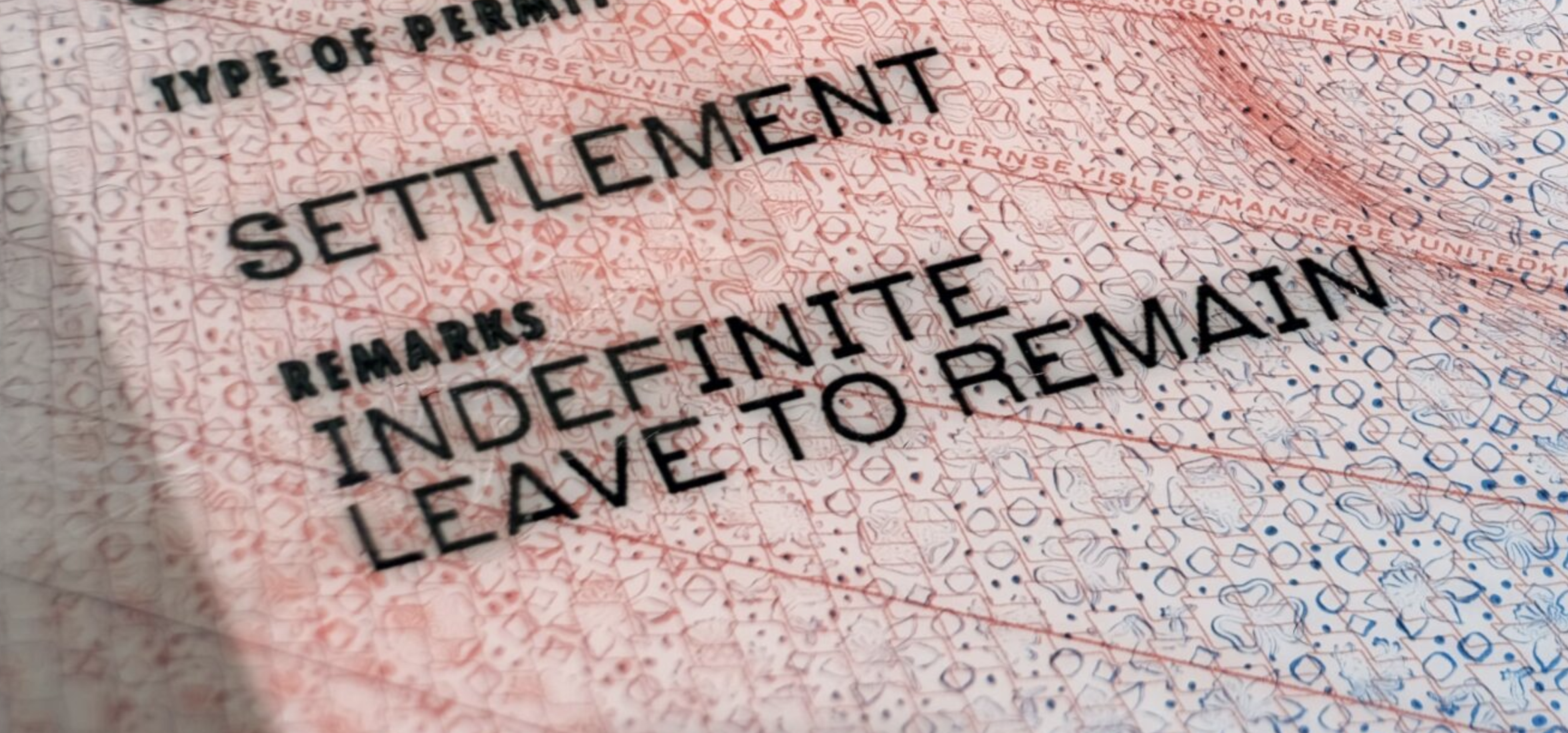
Older proofs still in circulation include a Biometric Residence Permit (BRP) showing “Indefinite Leave to Remain”, “Indefinite Leave to Enter” or “No Time Limit”; a No Time Limit (NTL) stamp in a passport stating “There is at present no time limit on the holder’s stay in the United Kingdom”; an Indefinite Leave to Enter (ILE) stamp; an ILR stamp or endorsement in a passport; or a Home Office grant letter confirming ILR.
The eVisa is now the underlying record for all holders, including those who originally received a physical BRP, and the BRP is not being reissued. Guidance on the eVisa system is on the GOV.UK page for your eVisa and UKVI account.
What if I do not have a document to prove my ILR?
A holder of ILR who has no document evidencing the status applies for confirmation through a No Time Limit (NTL) application, which results in an eVisa added to the UKVI account.
The NTL application is the standard route for older ILR holders whose original status was endorsed in an expired passport, or whose previous BRP has been lost. The application requires evidence of the original grant of ILR (where available) and identity documents. The eVisa issued at the end of the process is the proof of status going forward, and the share-code service then operates from that account.
To discuss your settlement status or NTL application with an experienced adviser, contact our immigration team on 0208 757 5751 or use our Contact Form.
Do I need permission to work in the UK once I have ILR?
No. ILR removes the work restrictions that applied during the qualifying residence period. The holder may take up new employment, enter self-employment, or run a business, without further immigration permission.
Restrictions that applied on earlier visa categories no longer apply. Student visa holders limited to 20 hours of work per week during studies are no longer subject to that limit after ILR. Skilled Worker holders tied to a particular sponsor and occupation can change roles freely after ILR. The employer will run a right-to-work check using a share code from the holder’s UKVI account, in the same way as for any other settled worker.
Can I access UK healthcare if I have ILR?
Yes. NHS healthcare is available on the same terms as any UK resident where the ILR holder is ordinarily resident in the UK, meaning habitually and usually resident with any absences being of a temporary or occasional nature.
NHS GP registration is open to anyone living in the UK regardless of immigration status. Hospital and secondary care is provided free of charge to ordinary residents. Where the holder spends extended periods outside the UK, the position can change; an ILR holder who has been outside the UK for a long continuous period may need to evidence ordinary residence on return. Guidance is in the GOV.UK page for NHS entitlements for migrants.
Can I sponsor my family members to join me in the UK once I have ILR?
Yes, in many cases. An ILR holder is a settled person for the purposes of the Immigration Rules and is eligible to sponsor a partner, dependent children and, in narrow circumstances, other family members.
Partner sponsorship is under the family route in Appendix FM and requires the financial requirement, the relationship requirement, the English language requirement and the accommodation requirement to be met. Child sponsorship rules vary depending on the child’s age, relationship to the ILR holder, and whether the child is already in the UK. Other family routes carry their own conditions. The right to sponsor follows from holding ILR; the eligibility of the family member is then assessed against the specific route. Whytecroft Ford services partner and dependent child sponsorship; the adult dependent relative and parent routes fall outside the firm’s scope and are referred to specialist counsel where they arise.
What if I have a child born in the UK after I am granted ILR?
A child born in the UK on or after 1 January 1983 to a parent who is settled or a British citizen at the date of the child’s birth is automatically a British citizen at birth and does not need to register.
Where the parent obtained ILR after the child was born in the UK, the child does not become British automatically when the parent’s ILR is granted, but the child may apply for registration as a British citizen under section 1(3) of the British Nationality Act 1981. The application is made on form MN1 once the parent has become settled. The position turns on the parent’s status at the date of birth, not on the position later.
Can I access public funds once I have Indefinite Leave to Remain?
Yes. ILR removes the “no recourse to public funds” condition that applies during the qualifying residence period, and the holder may claim benefits and other public funds on the same basis as any settled person, subject to the eligibility rules for each benefit.
The list of public funds includes income support, jobseeker’s allowance, housing benefit, council tax reduction, child benefit, child tax credit, and certain disability and care-related benefits. Eligibility for each benefit is decided by the Department for Work and Pensions or the local authority against the benefit’s own rules, not by the immigration position alone; the ILR position removes the immigration bar.
Can I vote in the UK once I have ILR?
Voting rights in UK elections depend on nationality and the type of election, not on ILR status alone. ILR by itself does not automatically confer the right to vote in UK Parliamentary elections.
UK Parliamentary general elections are open to British citizens, Irish citizens resident in the UK, and qualifying Commonwealth citizens resident in the UK. Local elections in England and Northern Ireland follow a similar rule, with qualifying EU citizens retaining rights under transitional arrangements following the Elections Act 2022. Local elections in Scotland and Wales are open to any foreign national with leave to enter or remain in the UK, which includes ILR holders regardless of nationality. The position therefore turns on the holder’s nationality combined with the relevant election rules in the relevant part of the UK.
Do I still need to register with the police after settling in the UK?
No. The Police Registration Scheme for foreign nationals was abolished on 4 August 2022. Foreign nationals previously required to register with the police are no longer required to do so, and registration certificates issued before that date are no longer in force.
Where the ILR holder previously held a police registration certificate, that certificate is no longer needed for immigration purposes. New visa grants no longer attach the registration condition, and existing holders did not need to do anything when the scheme ended.
Can I lose my Indefinite Leave to Remain?
Yes. ILR can be lost in two principal circumstances: through extended absence from the UK, or as a consequence of certain criminal or immigration decisions.
ILR lapses under the Immigration Rules where the holder is outside the UK for a continuous period of more than two years. The two-year rule applies to ILR holders other than those with settled status under the EU Settlement Scheme, who may be absent for up to five years (four years for Swiss nationals) before settled status lapses.
A holder whose ILR has lapsed must apply for a Returning Resident visa to re-enter the UK and resume settled status. ILR can also be revoked where the holder is convicted of a serious offence and deportation is ordered, or where the original grant is found to have been obtained by deception. The lapse and revocation rules are separate from the question of citizenship, which carries its own separate revocation framework.
How Whytecroft Ford can help
The Whytecroft Ford immigration team assists ILR holders across both the questions that arise after settlement and the next step into British citizenship by naturalisation. The firm advises on NTL applications, on partner and child sponsorship after ILR, on the position when the holder spends extended periods abroad, and on the route into naturalisation under section 6(1) and section 6(2).
To discuss your ILR position or your next step with the team, contact us on 0208 757 5751 or use our Contact Form.
Frequently asked questions
The exact combination depends on the route, but most applications require a valid passport or travel document, evidence of the qualifying residence period and absences, evidence of meeting the English language and Life in the UK Test requirements, financial evidence appropriate to the route, accommodation evidence, and evidence of any qualifying relationship. The detailed checklist is in the Home Office published guidance for the route.
ILR can be applied for up to 28 days before the holder reaches the qualifying period of continuous residence. Applying earlier than 28 days is treated as a premature application and is refused.
ILR does not expire as a status, but it can lapse if the holder is outside the UK for more than two continuous years (five years for EU Settlement Scheme settled status; four years for Swiss nationals). BRPs issued before October 2024 carried a printed expiry date that did not reflect the validity of the underlying ILR; the eVisa is now the operative record.
The two statuses are similar in conferring settled status, but the rules on extended absence differ. ILR lapses after two continuous years outside the UK; settled status under the EU Settlement Scheme lapses after five years outside (four for Swiss nationals). The underlying right to live and work in the UK without time limit is the same in substance.
The standard ILR application fee, as of 2026, is £3,226 per applicant. Additional costs may include the Life in the UK Test fee, an English language test where required, certified translations, and any optional priority processing fee. The current fee table is published on the GOV.UK page for Home Office fees.
Sources
- Your eVisa and UKVI account, GOV.UK
- NHS entitlements: migrant health guide, GOV.UK
- Visa fees, revised table, GOV.UK
The material in this article is provided for guidance and general information only and is not intended to constitute legal or other professional advice on your circumstances upon which you should rely. In particular, the information should not be used as a substitute for a full and proper consultation with a suitably qualified professional. UK Immigration Rules are subject to change. Please do contact the Whytecroft Ford team if you require further advice.